
Summer Burnout Is Real: Why "Fun" Can Leave You More Exhausted Than Winter Ever Did
Why does summer leave you more exhausted than winter? A counsellor explains the summer burnout trap and how to protect your mental health
Summer Burnout Is Real: Why "Fun" Can Leave You More Exhausted Than Winter Ever Did
As a counsellor, I notice something funny every year around June: my clients start disappearing. Appointments get cancelled for barbecues, rescheduled for road trips, or quietly skipped because "things are good right now." On the surface, that tracks — the sun is out, everyone's on patios, there's a glass of wine here, a late night there. Summer feels like permission to finally relax.
Except the same clients often come back in September burnt out and more exhausted than when they left.
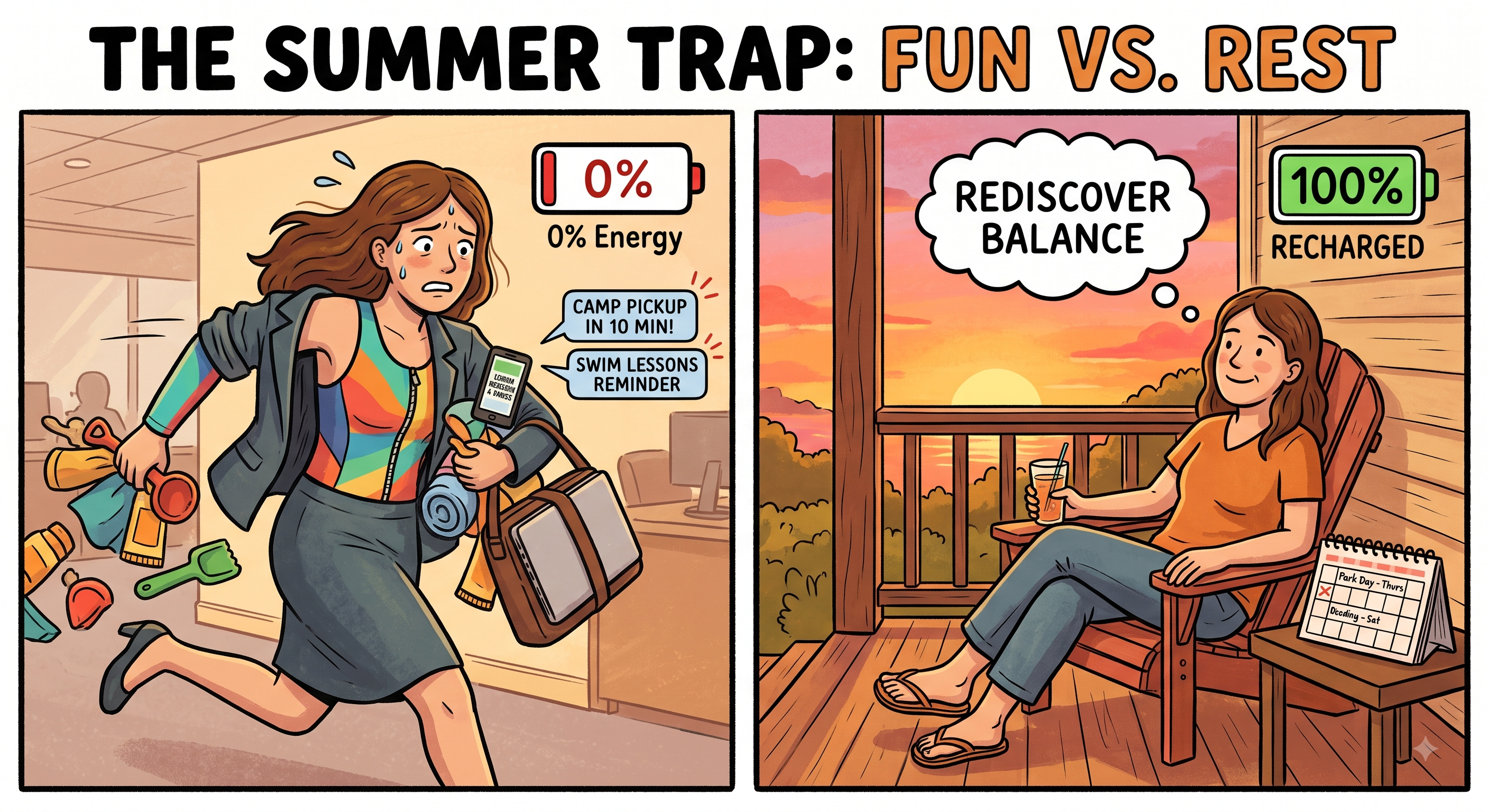
I fall into this trap myself. Every summer I say yes to more plans, stay up later because the evening is warm and my husband and I are finally having a real conversation on the porch, keep working full days on top of it all — and somehow expect it to just fit. By the end of August, I'm running on fumes, wondering why a "lighter" season left me more drained than February did.
This is what I call summer burnout — and if it sounds familiar, you're far from alone. Let's talk about why fun and rest aren't the same thing, and how to protect your mental health while still enjoying your summer.
What Causes Summer Burnout?
Warm weather and social plans genuinely do boost mood. But your body still needs the same basics it needs every other season: sleep, downtime, some kind of routine. Summer doesn't suspend those rules just because it's pretty outside.
The problem isn't the wine, the late nights, or the friends — it's the stacking: full work hours, plus a full social calendar, plus less sleep, plus zero days where nothing is happening. That's not a summer, that's a second job with a better soundtrack.
Work-Life Balance in Summer: Is It Adding to Your Life, or Just Adding to Your Load?
Before saying yes to something, ask: Is this replacing something, or piling on top of everything else?
Dinner with friends instead of your usual Tuesday at home — that's a trade. Dinner after a full workday, on top of your evening tasks, followed by staying up two hours past your normal bedtime — that's a debt. Debts get collected, usually as a very tired, very short-tempered you in late August.
Why Regular Mental Health Care Isn't Optional Just Because It's Sunny
Whatever normally keeps you steady — therapy, exercise, sleep, quiet mornings — doesn't get to take the summer off. It's tempting to think, "I'm feeling good, I don't need my appointment this month." But mental health care isn't just for when things fall apart — it's what keeps them from falling apart in the first place. Skipping it during your busiest season is like skipping oil changes because the car "seems fine." It usually seems fine right up until it doesn't.
5 Summer Self-Care Tips to Avoid Burnout
You don't need a color-coded schedule to protect your energy this summer. A few honest guardrails go a long way:
Pick your real priorities, not all of them. Choose two or three for this month and let the rest be "good enough."
Protect sleep like a plan you made with someone you respect — because it is, with yourself.
Keep one boring, unplanned day a week. Your nervous system needs it more than another outing.
Don't let "spontaneous" become "unlimited." One late night is lovely. Three in a row on top of full workdays is how you end up crying at a barbecue over potato salad.
Keep your regular check-ins — therapist, doctor, or just yourself. A five-minute honest gut-check counts.
Protecting Connection Without Sacrificing Sleep
That evening chat with your husband isn't the problem — it's one of the genuinely good parts of summer, worth protecting. The issue is when it comes with no adjustment anywhere else: same wake-up time, same workload, just minus two hours of sleep, repeated for twelve weeks straight.
The fix isn't quitting summer nights. It's catching up on sleep the next night, trading some daytime plans for porch time instead of stacking both, or just saying, "Let's wrap up by 11." Balance means not borrowing tomorrow's energy for tonight's fun.
The Bottom Line on Beating Summer Burnout
Summer isn't the enemy — treating it like a competition to squeeze in the most joy on top of an unchanged workload is. The people who thrive keep a little routine, protect their sleep, and keep their regular check-ins going.
Have the wine, the late nights, the spontaneous plans — just don't let them replace the steady stuff holding you together. That's how you get to enjoy September too.
Frequently Asked Questions About Summer Burnout
Why do I feel more tired in summer than in winter? Summer often adds more social plans, less sleep, and unchanged work hours on top of your normal routine — a "stacking" effect that quietly drains energy even though the weather is enjoyable.
Should I skip therapy or mental health appointments during summer? No. Regular mental health care is what prevents burnout in the first place, not just something needed once you're already struggling. Skipping appointments during a busy season often does more harm than good.
How do I balance work, family, and fun during the summer without burning out? Pick two or three real priorities each month, protect your sleep, keep at least one unplanned day per week, and keep your regular check-ins — whether that's therapy, a doctor's visit, or just an honest check-in with yourself.
Is it normal for therapy clients to take breaks in summer? Yes, it's extremely common — but "feeling good" isn't the same as "not needing support." Lighter-touch options like biweekly sessions can help maintain progress without the all-or-nothing approach.
Ready to take the next step?
Professional support is closer than you think
If something in this article resonated with you, counselling can help you explore it further. Alexandra works with individuals navigating anxiety, trauma, relationships, and life transitions.