
September can feel like a lot — even when nothing is actually wrong.
How to transition to fall in a gentle way to help your nervous system to regulate and relax
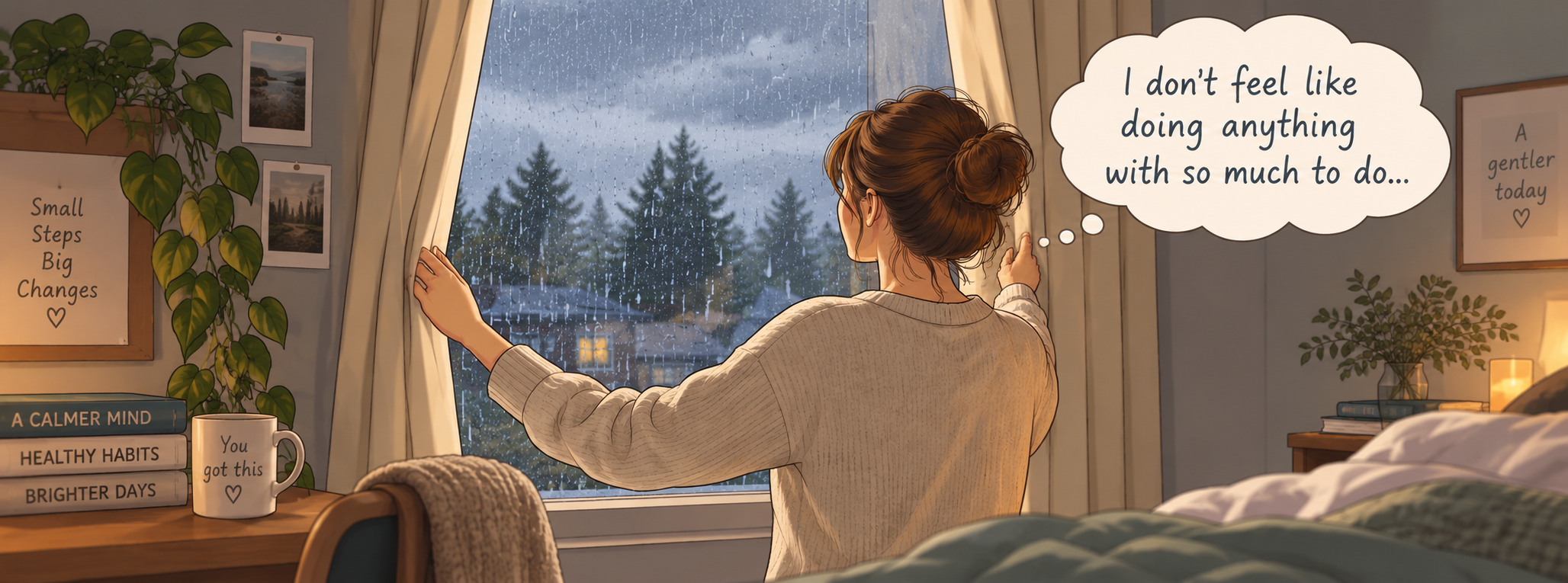
There’s something about this time of year that asks us to shift gears quickly.
Kids are going back to school.
Routines are changing.
The days are getting shorter and darker.
The air is getting colder.
And somewhere along the way, the carefree feeling of summer starts giving way to work mode — deadlines, responsibilities, career goals, new achievements, and everything we want to accomplish before the year ends.
Our minds may be ready to get organized and productive, but our nervous system doesn’t always switch gears quite so quickly.
You might notice more tension, restlessness, irritability, anxiety, low energy — or simply a feeling of “I have so much to do.”
And maybe you don't need to push yourself harder.
Maybe you need to help your body feel safe with the transition.
🌿 Start gently.
Keep some of the things that helped you feel good this summer — time outside, movement, connection, slower mornings or evenings.
☀️ Get some daylight when you can, especially earlier in the day.
🫶 Give yourself small moments of pause between tasks instead of moving from one demand straight into another.
📋 When your mind starts racing through everything you should be doing, come back to what is actually needed today.
🍂 And let yourself feel whatever comes with the changing season. You don't have to be excited about fall. It's okay to feel a little sad that summer is ending.
Your nervous system isn't a machine that needs to be switched from REST to PRODUCTIVITY.
It needs time, consistency, safety and gentle transitions.
So as September begins, you don't have to rush to become your most productive self.
Take a breath.
Find your rhythm.
Let yourself arrive slowly.
You have time. 🤍
What would make this transition feel a little gentler for you?
Ready to take the next step?
Professional support is closer than you think
If something in this article resonated with you, counselling can help you explore it further. Alexandra works with individuals navigating anxiety, trauma, relationships, and life transitions.